Swiss glaciers lost more than 5% of ice volume in 2026. Heat waves and low winter snow accelerated the thaw
3 hours ago
Your support keeps PBS News free and accessible.
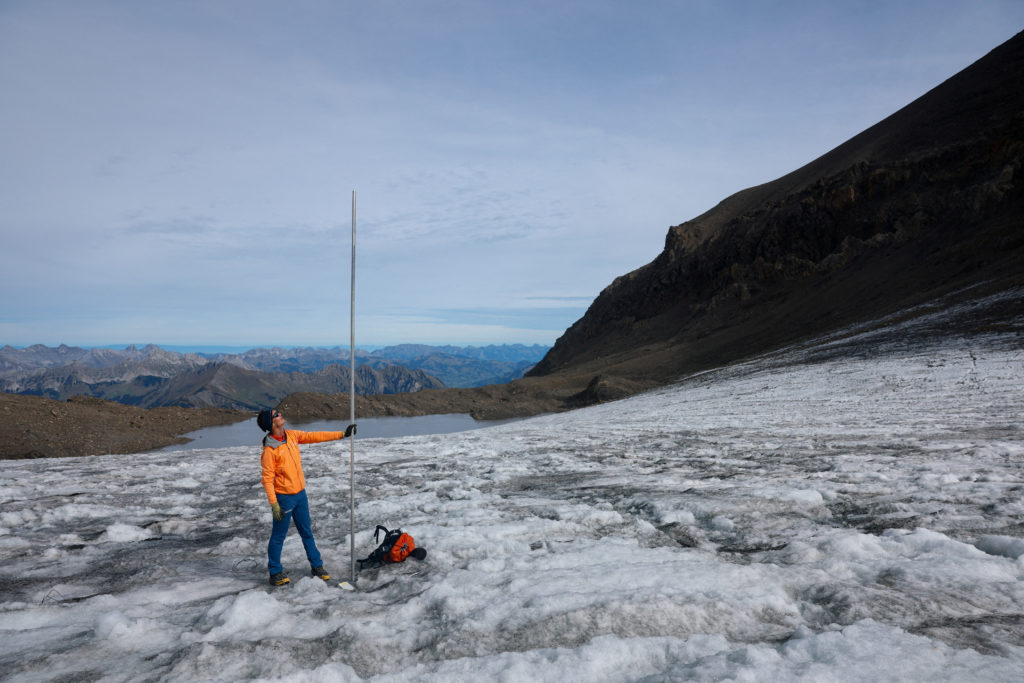
ZURICH, Switzerland (AP) — Glaciers in Switzerland – the home to the most in the Alps – lost 5.5% of their ice volume this year, the second-biggest percentage drop on record due to heat waves and low winter snowfall, experts report.
"Alpine glaciers have no chance of surviving in the long term under such conditions," the GLAMOS Swiss glacier monitoring service and Swiss Academy of Sciences said in a statement released Thursday.
The trend has worsened in recent years: Over the past five years alone, the volume of ice in Switzerland has declined by nearly a fifth, the experts say.
wide worlds of science, health and technology.
The report testifies to the latest concerns that global warming is wreaking havoc on Europe, the world's fastest-warming continent.
"The warming that we are experiencing now can be attributed 100% to anthropogenic climate change. It's as simple as that," said Matthias Huss, who heads GLAMOS. "Without human emissions or fossil fuels we wouldn't have any warming at the moment."
The record retreat of glacier ice in Switzerland came in 2022, when summer heat, low winter snowfall and an unusual smattering of reddish dust blown in from the Sahara darkened the glaciers and caused them to absorb more heat.
Copyright for this text belongs to PBS.