From energy crisis to energy transition: How renewables are reshaping energy security
yesterday
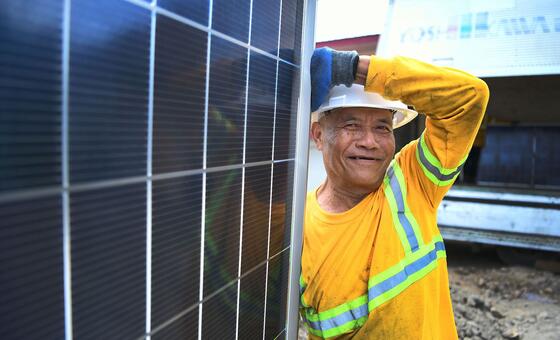
A worker installs solar panels in Lanao del Sur in the Philippines.
The continuing conflict in the Middle East is disrupting global energy markets and pushing up fuel prices, with knock-on effects far beyond the region.
For Francesco La Camera, Director-General of the International Renewable Energy Agency (IRENA), the crisis is also reshaping how the world understands the phrase “energy security.”
For decades, that meant a country's reserves of oil and gas. Today, he says, countries want a system that is more diverse, decentralised and within their own control – and renewables are becoming central to that.
IRENA Director-General Francesco La Camera (fifth from the right) visits an offshore wind power project by China’s Yancheng City.
Speaking to UN News ‘s Jing Zhang during the General Assembly's High-Level Week, Mr. La Camera traced today's thinking back to the oil shocks of the 1970s, when the world first treated energy security as a systemic concern and set up international bodies to stabilise markets.
Back then, energy security meant one thing: reserves of oil and gas.
“Countries have realized that a centralized energy system based on fossil fuel doesn't provide energy security,” he said.
Copyright for this text belongs to UN News.