Catch your own dinner: how Zauo, Japan's fishing izakaya, works
At Zauo you drop a line into an indoor tank, and whatever you catch becomes your sashimi or grilled dinner. How pricing works, what you can catch, and how to not go home fishless.
What Zauo is
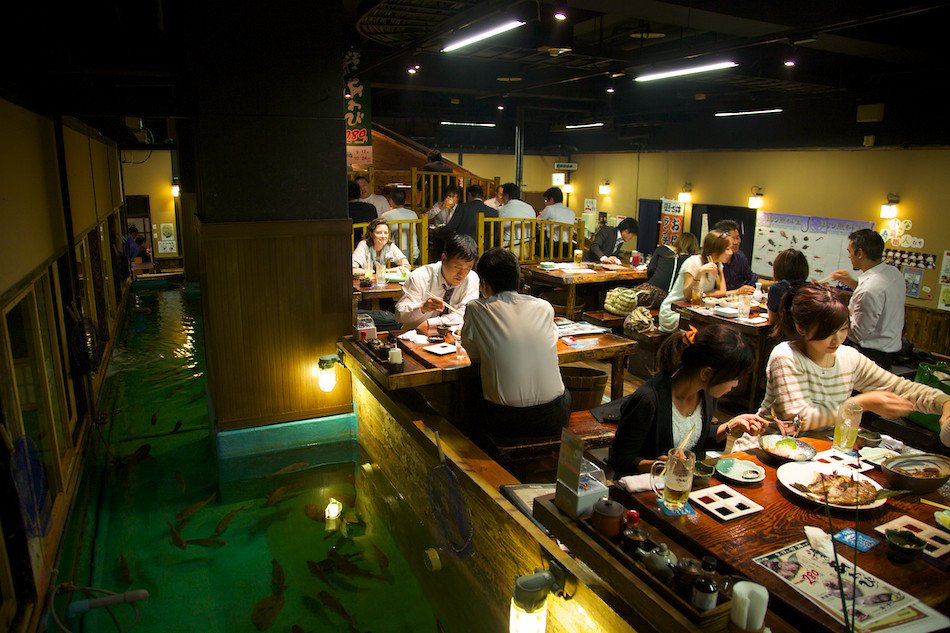
Tsuribune Chaya Zauo is an izakaya built around a large indoor tank with a wooden fishing boat for seating. You drop a line from your seat and catch your own dinner. Run by Fukuoka-born company Harbour House, its current flagship is in Namba, Osaka, with Tokyo branches in Shinjuku, Shibuya, and Meguro among others. Every catch triggers a staff drumroll and a loud congratulatory chant, so the room stays lively. Your fish goes straight to the kitchen and comes back as sashimi, salt-grilled, deep-fried, or sushi. It's a hit with kids, and because dinner doubles as an attraction, it's a popular evening plan for visitors to Japan.
How it works, catch to table
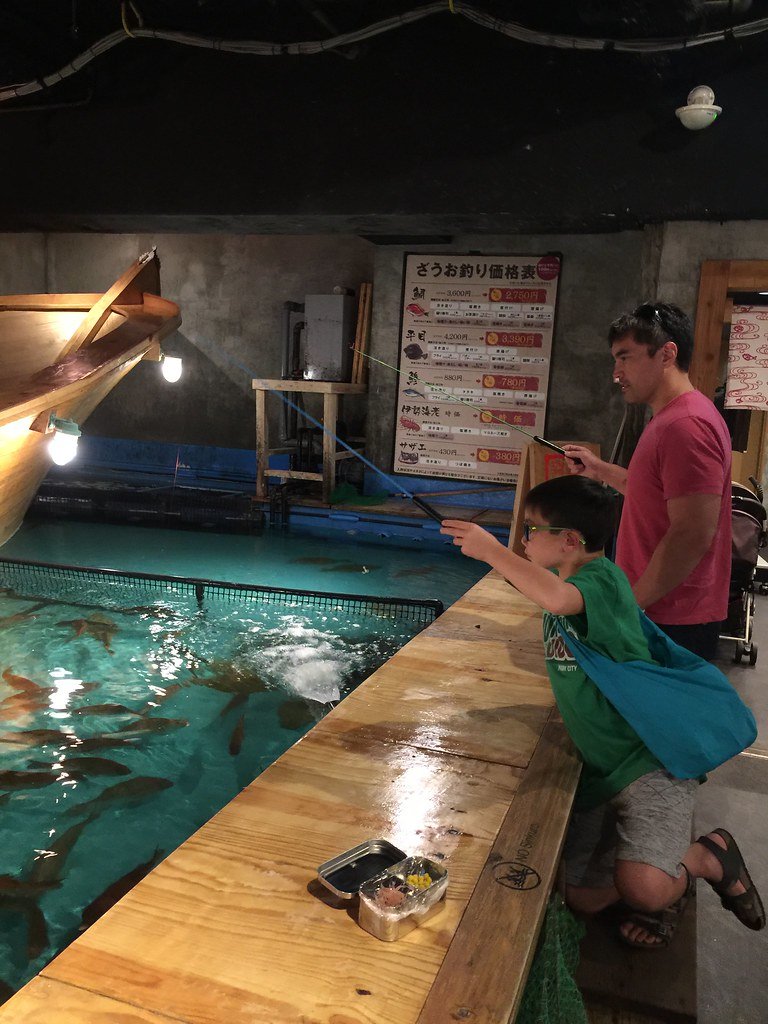
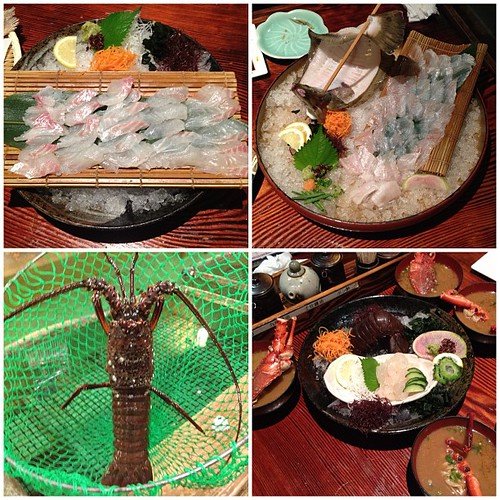
The flow is simple. Rent a rod at your table (a small fee, a few hundred yen), bait the hook, and drop the line into the tank. Bait fishing is the default; staff will show you the technique, and some branches offer nets or set rods for certain targets. One rule matters: whatever you catch, you buy. There is no catch-and-release, so only cast when you're ready to eat the result. In exchange, a caught fish is generally cheaper than ordering the same fish from the menu—the discount is the reward for catching it. Once you land one, pick a cooking style: sashimi, salt-grilled, deep-fried, simmered, tempura, or sushi, with a cooking fee on top of the fish price. Some branches will split one fish two ways—half sashimi, half karaage—which is worth asking about if you catch something big.
What you can catch and what it costs
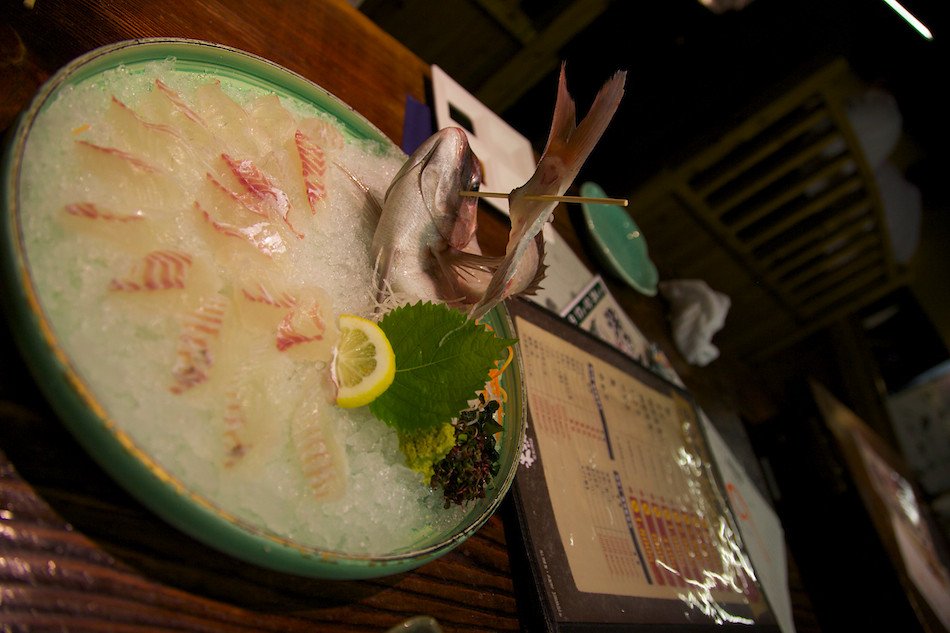
The tanks usually hold horse mackerel (aji), sea bream (tai), and flounder (hirame), with spiny lobster or shellfish appearing at some branches. Difficulty and price rise together. - Aji — easiest to hook and cheapest. The right first target for beginners and kids; great deep-fried or as a whole-fish sashimi plate. - Tai and hirame — a real fight on the line and a few thousand yen a fish. Best as sashimi or salt-grilled, and the drumroll feels earned. - Lobster and friends — sometimes netted rather than hooked; a splurge item. The bill adds up as rod rental + your fish + cooking fees + normal izakaya food and drinks. Fish prices vary by branch and season, so check the price board or ask before casting. And if fishing isn't your thing, you can simply order from the menu like a regular seafood izakaya.
Sponsored · More experiences
Beyond fishing: browse Tokyo food experiences and night tours on Viator
Tsukiji walks, izakaya hopping, ramen making and more
How to actually catch one
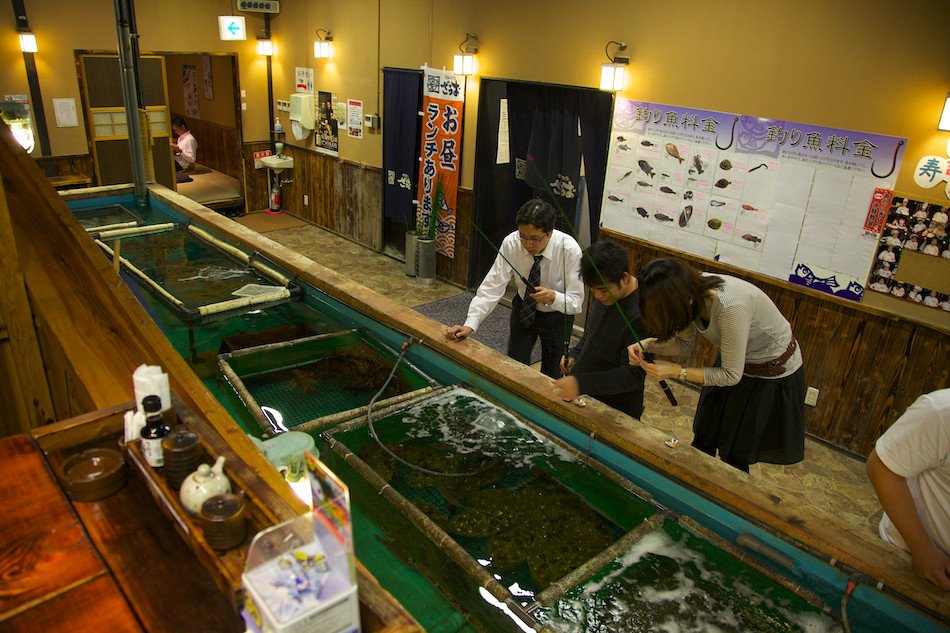
Avoiding the dreaded fishless hour comes down to a few habits. 1) Go right at opening. The fish are hungriest before everyone else has fed them; by closing time they've seen every bait in the house. 2) Find where the fish crowd—corners and shaded spots of the tank—rather than casting only in front of your seat. 3) Check your bait often. An empty hook catches nothing. 4) When you feel a bite, wait a beat before setting the hook. Pull too early and it's gone; wait until the rod bends. 5) Ask the staff which fish are biting today. They'll tell you honestly. Some days nothing bites. You can still order the same dishes from the menu, so treat a catch as a bonus, not the entry fee for dinner.
Reservations, locations, getting there
For visitors, the easiest branch is Shinjuku, Tokyo—in a hotel basement within walking distance of the station, with English menus and staff used to overseas guests. The official store list also covers Tokyo (Shibuya, Meguro, Kameido), Chiba (LaLaport TOKYO-BAY), Saitama (Tokorozawa), Kanagawa (Yokohama-Tsunashima), Aichi (Hoshizaki, Komaki), Mie (Suzuka), and the flagship in Namba, Osaka. Branches open and close, so check the official list before you go. The boat seats are the popular ones and fill up with families on weekends, so book ahead if you want them (many branches take online reservations). Plan on roughly 90–120 minutes for fishing plus dinner. Some branches do birthday and anniversary celebrations—ask when booking. Dinner cost swings with what and how much you catch; a few thousand yen per person including drinks is a reasonable baseline. With a family, agree on a catch limit—say two or three fish—so the bill stays predictable.
Cautions and etiquette
A few things to know before you go. - No releasing your catch. Hooking fish for sport inflates the bill fast—catch only what you'll eat. - Your hands will smell of bait and fish. Towels are provided, but wet wipes make life better, and skip the white shirt in case of splashes. - Be kind to the tank: don't startle or slap at the fish, and mind your rod around neighboring seats. - Not a raw-fish person? Choose cooked styles—deep-fried, salt-grilled, simmered. Mention allergies when ordering. - Prices, hours, and branches change. This article explains the system; confirm current numbers and booking rules on the official site.
Tips
- Fish bite best right at opening. Reserve boat seats on weekends.
- Beginners and kids: target aji first—cheap, easy, and great deep-fried.
- You buy what you catch. Set a family catch limit (say three) to control the bill.
- No catch? Order the same dishes from the menu. Treat catching as a bonus.
- Check Zauo's official site for current branches and prices—they change.