From Japan to Rwanda, early warnings are saving lives – but millions remain unprotected
3 days ago
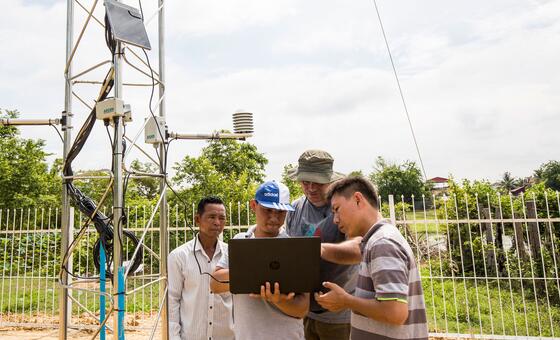
Early warning systems are being installed in Cambodia.
Early warning systems are saving lives across the globe, but for millions of people the warning never arrives, UN Secretary-General António Guterres said on Wednesday, urging the world to protect every person on Earth by the end of 2027.
“ No one should lose their life simply because a warning came too late – or never came at all ,” he told a high-level event on the Early Warnings for All initiative at the COP31 climate conference , which runs until 20 November in Antalya, Türkiye.
His appeal came as a new report from the UN Office for Disaster Risk Reduction ( UNDRR ) and the World Meteorological Organization ( WMO ) showed that 136 countries – 70 per cent of the total – now report having multi-hazard early warning systems, 17 more than in March 2025 .
Yet major gaps remain in the most vulnerable countries, as a powerful El Niño raises the stakes.
The report , Global Status of Multi-Hazard Early Warning Systems 2026 , finds that countries with substantial to comprehensive systems record disaster-related mortality 6.1 times lower than those with limited to moderate ones, and 3.2 times fewer people affected .
It also shows what that means on the ground. When a magnitude 8.8 earthquake struck off Russia’s Kamchatka Peninsula in July 2025, the Pacific Tsunami Warning Center issued its first threat messages within 10 minutes.
Copyright for this text belongs to UN News.