From Japan to Rwanda, early warnings are saving lives – but millions remain unprotected
3 日前
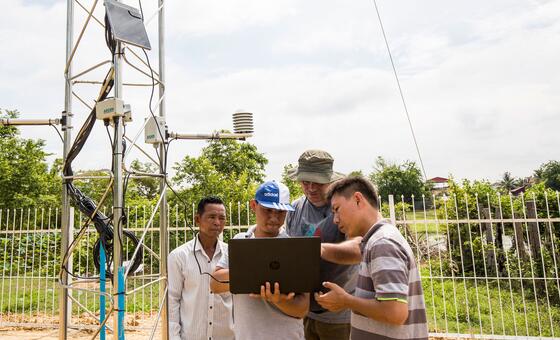
Early warning systems are being installed in Cambodia.
Early warning systems are saving lives across the globe, but for millions of people the warning never arrives, UN Secretary-General António Guterres said on Wednesday, urging the world to protect every person on Earth by the end of 2027.
“ No one should lose their life simply because a warning came too late – or never came at all ,” he told a high-level event on the Early Warnings for All initiative at the COP31 climate conference , which runs until 20 November in Antalya, Türkiye.
His appeal came as a new report from the UN Office for Disaster Risk Reduction ( UNDRR ) and the World Meteorological Organization ( WMO ) showed that 136 countries – 70 per cent of the total – now report having multi-hazard early warning systems, 17 more than in March 2025 .
Yet major gaps remain in the most vulnerable countries, as a powerful El Niño raises the stakes.
The report , Global Status of Multi-Hazard Early Warning Systems 2026 , finds that countries with substantial to comprehensive systems record disaster-related mortality 6.1 times lower than those with limited to moderate ones, and 3.2 times fewer people affected .
It also shows what that means on the ground. When a magnitude 8.8 earthquake struck off Russia’s Kamchatka Peninsula in July 2025, the Pacific Tsunami Warning Center issued its first threat messages within 10 minutes.
本文の著作権はUN Newsにあります。